How to Prepare an HOA Community for Parking Enforcement
Board-approved rules, posted signage, tow authorization, and resident communication — the checklist before launching professional parking enforcement.
Why preparation prevents pushback
Parking enforcement works when rules are clear, posted, and consistently applied. Boards that skip preparation often face resident complaints — not because enforcement is wrong, but because expectations weren't set.
Step 1: Confirm rules are board-approved and posted
Your CC&Rs and parking rules should match what is posted on site. If rules exist only in a PDF residents never see, enforcement will feel arbitrary.
Work with management to verify:
- Guest parking limits and permit requirements
- Fire lane and handicap restrictions
- Overnight parking policies
- Commercial vehicle rules
Step 2: Establish tow authorization
California tow programs require proper authorization and signage. Confirm your tow company, authorization forms, and fee disclosure signs are current before citations escalate to tows.
Step 3: Communicate before the first citation
Send a community notice explaining:
- When enforcement starts
- How permits work
- How to appeal or question a citation
- Who to contact (management first, then dispatch)
Step 4: Choose progressive enforcement
Most successful programs use warnings before citations for first-time or minor violations — except fire lanes and handicap spaces where immediate action may be required.
Step 5: Plan for documentation
Boards need monthly summaries: citation counts, repeat offenders, and tow logs. Our client portal makes this available without email chains.
How Sunset Safety Agency helps
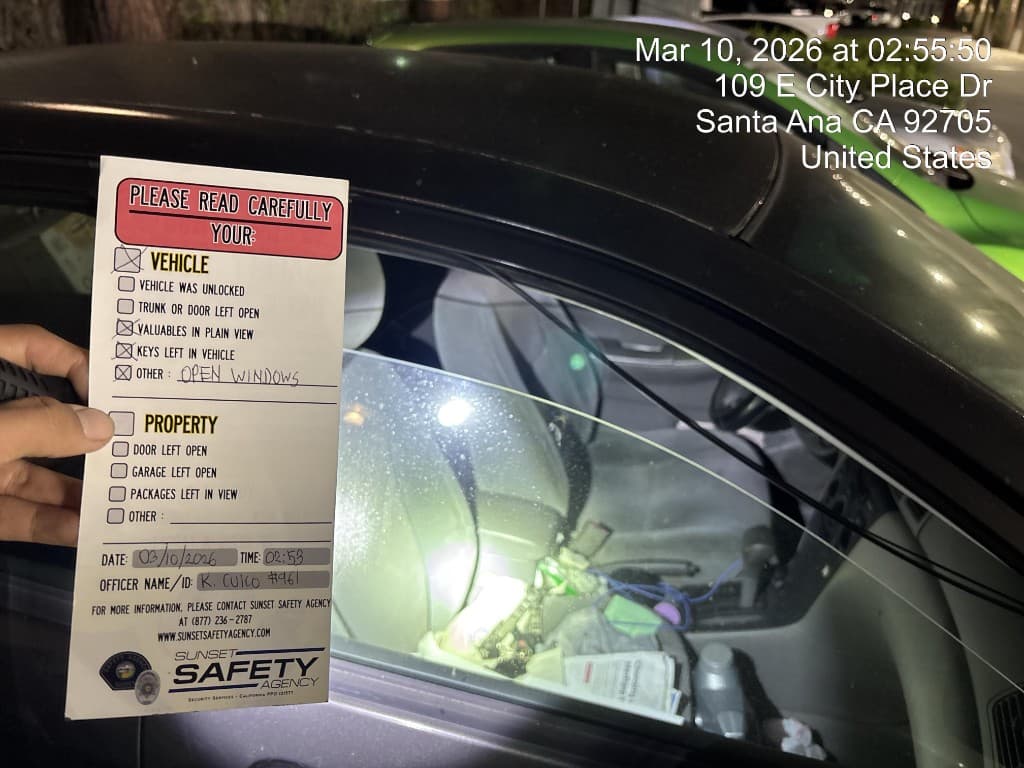
We align enforcement with your posted rules, document every action with photos where required, and coordinate tows through dispatch.
Explore parking enforcement or contact us for an HOA walkthrough.
Need patrol coverage you can trust?
Free consultation. Licensed PPO #121577. Same-week starts available.